Ms Evadne Chan, an attaché at the Singapore Tokyo Mission, was on her way back to the embassy – located in the hip Roppongi district – when she was rudely jolted in the car.
It was 2:46pm on March 11, and Japan had just experienced a tremor measuring 9.0 on the Richter Scale. People began streaming out of buildings, as bridges and lamp posts swayed dangerously overhead.
Reaching the embassy, Ms Chan, 50, saw her colleagues with their helmets on as the building shook precariously.
“It was frightening,” she recalls but there was no time for panic. Amid the countless aftershocks, the Embassy staff swung into emergency mode, accounting for all staff and their dependants while checking on the building’s structural safety.
First Secretary Kwong Terk Ming, 31, was the Duty Officer that day and was manning the Embassy’s 24-hour hotline. The phone began to ring non-stop as people – including Singaporeans stranded at Disneyland – sought updates and advice. He and his other colleagues would not rest until the next morning when others would take over.
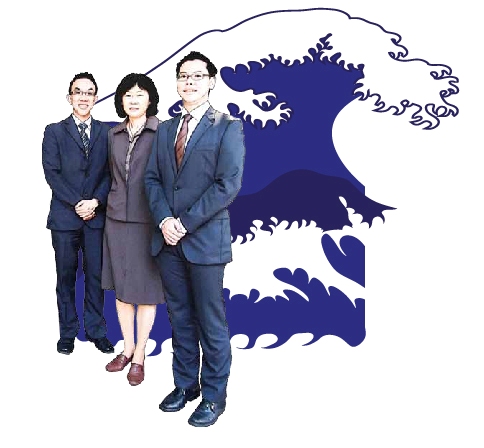
For the next few days, the Singapore Tokyo Mission would sleep little, working 22- hour days to get Singaporeans to safety. As scenes of the tsunami wreaking havoc unfolded on TV, First Secretary Khoo Seow Fong, 33, watched in disbelief. Hours later, news came of possible nuclear fallout. “Nothing you do could prepare you for this,” he says of the triple whammy. All they could do was to think on their feet, responding nimbly as the situation worsened.
It helped that both Mr. Khoo and Mr. Kwong had manned the Foreign Ministry’s hotline in Singapore when the Bali bombers struck in 2005. They had handled the deluge of calls, and were involved in the Ministry’s emergency response.
Crisis centre
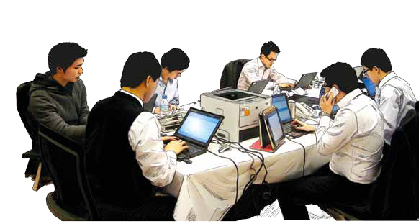
Realising the severity of the situation, Ambassador Tan Chin Tiong had a quick discussion with his deputy Laurence Bay, who then activated the Embassy’s 24-hour crisis management centre.
On a wall, a huge map of Japan charted the disaster zones that continued to widen. Much of northern Japan, including Tokyo, was paralysed; power and water supplies, transport and telecommunications networks severely affected.
The Embassy’s first concern was to contact Singaporeans, especially those in the affected areas of Fukushima where the ill-fated nuclear power plant was located.
With poor phone connections, staff used the broadband network to email Singaporeans and to advise those living within 100km of the nuclear plant to leave. A bus picked up evacuees while embassy staff kept in daily contact with those who chose to stay behind.
In order to give Singaporeans the most accurate advice, there was a daily race to collate information from media and local counterparts.
“We were tired as we lacked sleep and I could feel my mind working slower,” recalls Ms Chan.
Every day hundreds of requests streamed in: some needing help locating missing relatives while many were asking for consular assistance to leave Japan.
On many occasions, the Mission relied on local counterparts for help. Ms Chan recounts the case of a young Singaporean whose passport was held by his school in Tokyo. The Mission issued temporary travel documents so that he could fly home quickly but the papers were rejected by Japanese immigration officers at the airport.
Embassy staff held the plane for 45 minutes while Mr. Kwong called the Japan Foreign Ministry urgently to resolve the issue. “The boy’s mother was calling me every five minutes (from Singapore) saying, ‘Make sure my son leaves’,” says Ms Chan of the pressures they faced. The boy managed to leave, but only in the nick of time.
Extra hands
By Day Three, officers from the Singapore Tourism Board, Economic Development Board and International Enterprise Singapore based in Tokyo had joined the ranks. Working round the clock, they bunked in at the embassy’s living quarters.
Additional MFA staff were flown in to cope with the overwhelming requests for consular assistance and to assist Singaporeans stranded at Narita and Haneda airports.
Back in Singapore, the Foreign Ministry worked closely with the Home Affairs Ministry, National Environment Agency, and the Environment and Water Resources Ministry to assist the Tokyo mission. They shared information and gave advice, especially on the nuclear disaster.
Media queries were handled by the Singapore headquarters, freeing the Tokyo mission to tackle the most urgent tasks at hand. These included coordinating Singapore’s humanitarian response to the disaster.
Helping Japan
First Secretary Khoo worked with local partners to deploy a Singapore Civil Defence Force rescue team upon arrival, a day after the quake. He would stay in touch with the team, led by Major Tan Loo Ping, who was deployed at Soma City in Fukushima, until they returned to Singapore four days later.
Mr. Khoo also had to coordinate the distribution of emergency supplies from the Singapore Red Cross and Singapore Armed Forces to the affected areas.
Mr. Khoo, whose wife and daughter were in Tokyo then, was particularly moved by reports of children losing their families. “It served as a motivation to do what we can to help them,” he says. “It was no longer just work, there was a sense of calling.”
During the crisis, everyone chipped in, including the staff’s dependants. Mrs. Maureen Tan, wife of Ambassador Tan, even cooked for Embassy staff who could not leave the office.
The sense of duty and service among staff was palpable. When asked if they were ever worried for their own safety, the typical reply was: “There was no time to think too much about myself.”
In fact, both Mr. Kwong and Ms. Chan revealed that they were so caught up with contacting Singaporeans that they did not call their own families until a day after the quake.
“My father sent an email to the Ministry looking for his daughter,” reveals Ms Chan sheepishly.
Now, months after the crisis, life is back to normal at the Mission. But the lessons learnt will not be easily forgotten. Singaporeans are now promptly registering themselves with the Embassy once they arrive in Japan.
And the Tokyo Mission – strongly bonded by their common experience – is a team ready for the next challenge.
Collective action
Six days after the quake, the Japanese Economic Minister announced that Tokyo might experience a blackout due to a lack of power. Mr. Kwong saw how the Japanese collectively worked to avert the power outage. Escalators were halted, employees allowed to return home earlier, and streets were cloaked in darkness. Greatly impressed, Mr. Kwong thought that the Japanese people’s behavior exemplified a civic response to a national crisis.
No red tape
A Singaporean wanted his Japanese wife and their one-month-old baby to be brought to Singapore due to fears of nuclear radiation. Ms Chan asked the Singapore Immigration and Checkpoints Authority for help. The ICA granted citizenship and issued a passport to the newborn all in two days.