Challenge uncovers potential future pitfalls and explores ways Singapore can avoid them.
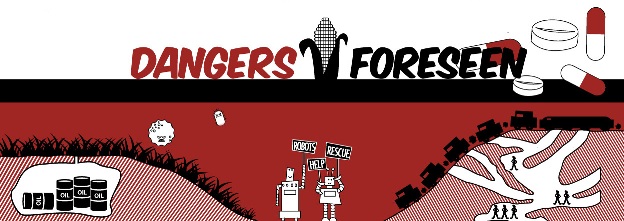
Nuclear Power: Panacea or Pandora’s Box
What’s happening?
With the world running out of energy and suffering pollution and global warming from burning fossil fuels, countries have turned to nuclear energy. But the recent Japan nuclear crisis has renewed fears of nuclear power gone awry. The Ministry of Trade and Industry, which is studying if Singapore should develop nuclear energy, said Singapore is “closely monitoring and learning from developments in Japan.”
Malaysia and Germany have put nuclear plans on hold.
Worst-case scenario (gulp):
Earthquake-prone Indonesia goes ahead to build four reactors near seismically active Sumatra. If a Japan-type disaster hits Indonesia, what would happen to Singapore?
What’s been done:
- In countries such as USA, nuclear power plants are built to withstand the worst earthquakes.
- In India, diesel generators provide power in emergencies.
But is it enough? What if we…
- Go underground? Singapore has already done so with ammunition and oil storage.
- Use thorium instead of uranium? Thorium reactors are said to shut down automatically in overheating, without external cooling.
- Build robots for rescue work? They could spare human rescue workers from radiation.
Food (In)security
What’s happening?
Food production has increased in the last 50 years but food prices still escalated in 2007-08, driven by demand for grain to make biofuel and to feed livestock. As a result, 1.02 billion suffered chronic hunger in 2009. The World Bank says the higher prices of food such as wheat, maize and sugars has led to extreme poverty among 44 millions more in developing countries since June last year.
Worst-case scenario (gulp):
Singapore imports as much as 90 per cent of its food. If food prices keep rising, what could we afford to eat in future? Practices to protect food supplies, such as export restrictions by grain-producing countries, may spell trouble for import-dependent countries like Singapore.
What’s been done:
- S$10million Food Fund by Agri-Food & Veterinary Authority (AVA) to promote local farming and diversification of sources.
- Vertical farming, which yields five times as much produce as traditional farming.
But is it enough? What if we…
- Turn to molecular gastronomy? It uses synthetic chemical compounds so there’s no need for natural ingredients.
- Grow “in-vitro”or “cultured meat” in a lab?
- Develop synthetic multi-vitamin food pills? Like the gruel Neo and his friends had in The Matrix.
Pandemic Fear
What’s happening?
While globalisation makes travel easier, diseases can now spread alarmingly fast. The risk is especially so for Singapore, with millions visiting annually for tourism. Coupled with the re-emergence of previously contained diseases like polio, tuberculosis and cholera, the threat of transnational pandemics is not to be underestimated.
Worst-case scenario (gulp):
What if pandemics could also be transmitted via living organisms? Recently, hard-to-detect bedbugs plagued thousands in the US. Expensive to eradicate, they can latch easily onto luggage. Imagine if such insects could transmit viruses in their bites...
What’s been done:
- The Health Ministry and Health Sciences Authority are on the advisory board of the Regional Emerging Diseases Intervention (REDI) Centre, a joint US-Singapore facility that gives early warnings of infectious diseases in the region.
- The Health Ministry has set up Pandemic Preparedness Clinics island-wide equipped to deal with flu outbreaks.
- Rapid response teams were set up quickly during the SARS outbreak to contain the spread.
But is it enough? What if we…
- Install automated mass-screening devices at all ports of entry? Machine-operate animal farms fully? This would reduce risk of diseases spreading to people.
- Go vegetarian? This would completely remove chances of transmission from animal to human.
- Augment human genes to resist diseases?
Are we urbanising too fast for our own good?
What’s happening?
The World Future Society predicted in 2009 that 60 per cent of the world’s population will be city-dwellers by 2030. The influx into cities could lead to over-rapid development, overcrowding and pollution. Singapore already has 5.1million people. How much more can our limited land support?
Worst-case scenario (gulp):
What if we run out of land to reclaim for living space? Might this mean shoebox apartments, capsule sleeping pods or underground burrows? Would we see more of our heritage buildings go? With more vehicles clogging the roads, be prepared for never-ending traffic jams and worsening pollution. Population density will also put greater strain on already scarce water supplies.
What’s been done:
Through careful long-term planning, the Urban Redevelopment Authority anticipates future challenges and plans for sustainable growth and a good quality living environment by:
- Building more densely and developing underground spaces to optimise land use.
- Promoting public transport to reduce dependency on private vehicles.
- Allowing flexibility for mixed uses (office, residential, commercial) of a single space.
- Improving water resilience with water reclamation methods like NEWater and desalination.
But is it enough? What if we…
- Build super skyscrapers, underground cities or floating communities?
- Ban oil-guzzling vehicles? Then introduce electric-powered vehicles and hydrogen-powered mass transit systems.
- Introduce Smart cars for rental in the CBD? This would reduce the need to drive into the city.